
This post explains how to set up a habit so it lasts past the first two weeks. You'll learn how to choose a habit, attach it to a cue, set a target that allows for real life, and track it without the streak becoming the thing that makes you quit.
Washitsu builds Habits for the Brain, an iPhone app for logging daily habits such as exercise, sleep and study. Much of what follows is the thinking behind how we set it up, but none of it needs an app. A notebook works too.
Pick one habit and make it specific
"Sleep better" or "exercise more" is a wish, not a habit. A habit is something you can tick off at the end of the day. Turn the wish into an action with a clear finish line:
- "Exercise more" becomes "brisk walk for 30 minutes"
- "Study more" becomes "review yesterday's notes for 10 minutes"
- "Use my phone less" becomes "phone in another room while I work"
Start with one or two. Adding five new habits at once spreads your attention thin, and when one slips, the others tend to follow. Once the first feels automatic, add the next.
Attach the habit to a cue you already have
Habits form more easily when they're triggered by something that already happens every day. Psychologists call this an implementation intention: a plan in the form "when X happens, I will do Y." Peter Gollwitzer's 1999 review in American Psychologist found that people who made plans like this were more likely to follow through on their goals than people who only set the goal.
Good cues are specific and reliable:
- After I pour my first coffee, I write down three tasks for the day
- On the train to work, I go over what I learned yesterday
- After dinner, I practise the guitar for 20 minutes
Notice the cue isn't a time on the clock. "At 7 p.m." is easy to miss. "After dinner" happens anyway. A reminder at the right moment can help at first, but the goal is for the cue itself to start the habit.
Set weekly targets, not daily ones
Many habits don't need to happen every day. Strength training twice a week or a long walk three times a week is a perfectly good target. Forcing these into a daily checkbox means you "fail" on rest days that were never meant to be training days.
Think in weeks instead. If your target is three walks a week and it's Wednesday with none done, you haven't failed. You still have time. This takes away a lot of the all-or-nothing pressure that makes people give up.
Plan for rest, too. Allowing yourself one day off a week is better than pretending you'll never need one, and it means a busy Saturday doesn't wipe out a good week.
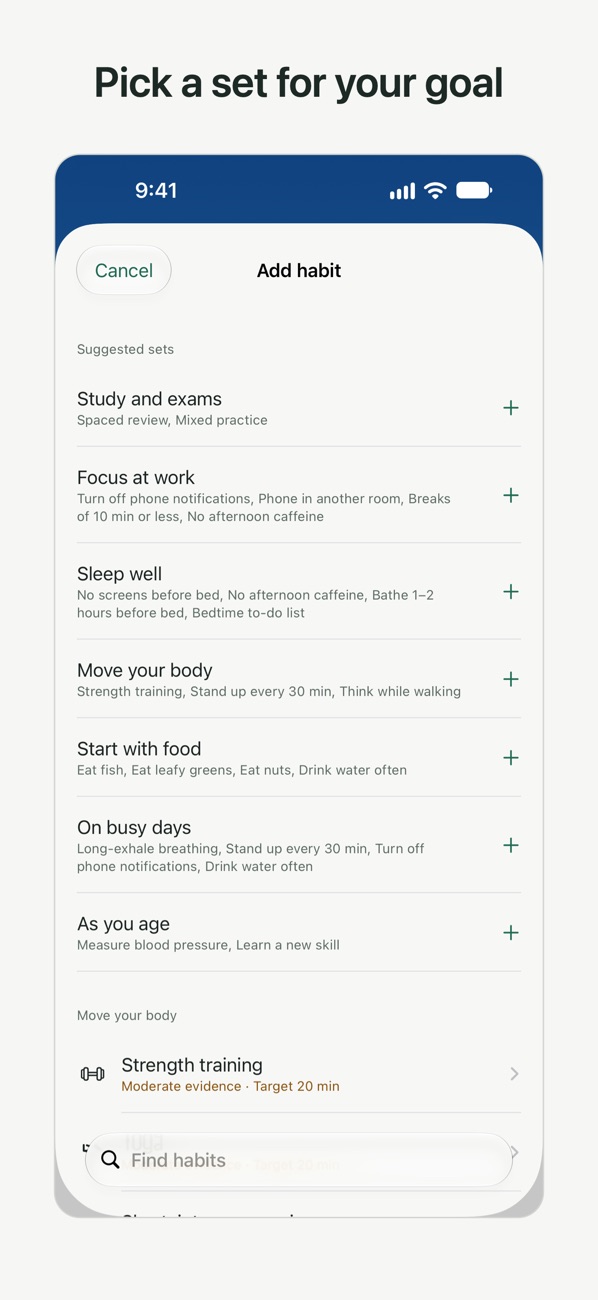
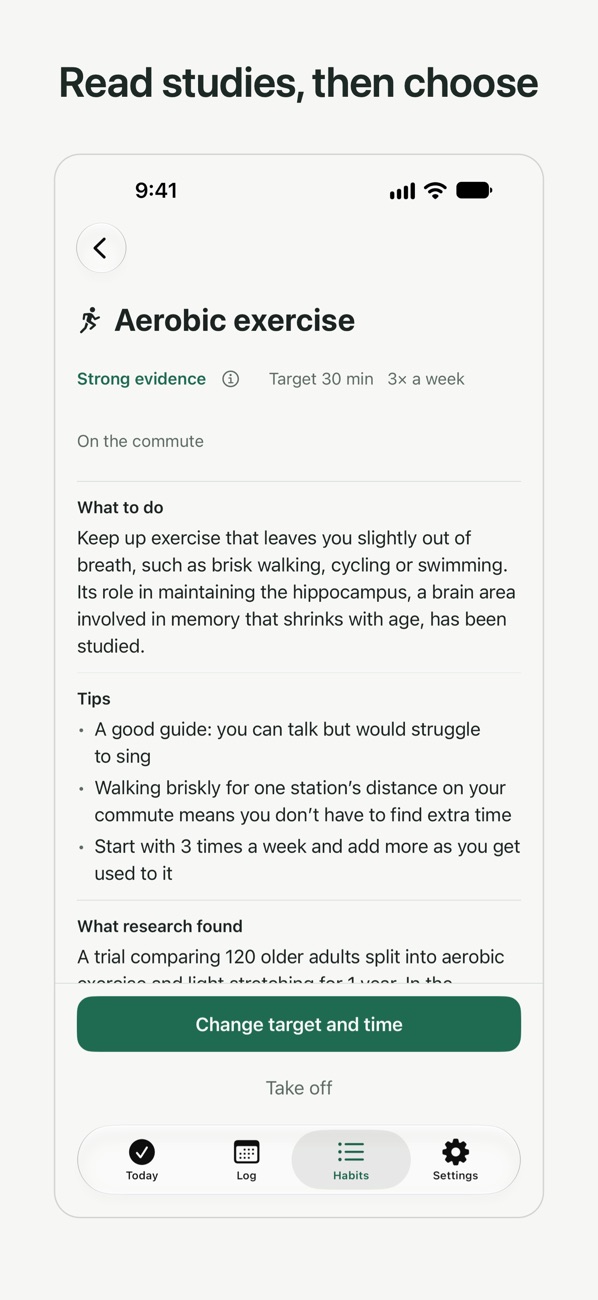
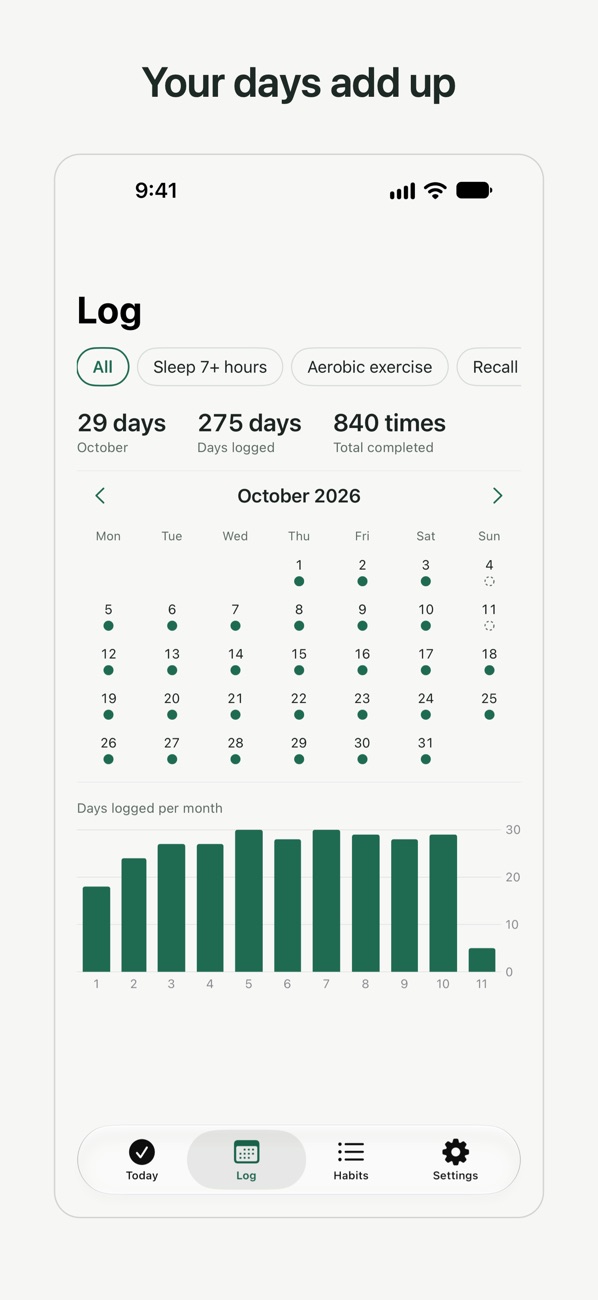
Habits for the Brain works this way. For each habit you set how many times a week, the cue and a notification time, and a habit set for twice a week isn't counted as missed on days when you can still reach the target that week. You can take up to one rest day a week.
Expect it to take longer than 21 days
The idea that a habit takes 21 days to form is popular, but it doesn't come from research on habit formation. A 2010 study by Phillippa Lally and colleagues at University College London, published in the European Journal of Social Psychology, followed 96 people as they tried to build a new daily habit. The time it took for the behaviour to become automatic varied widely, from 18 to 254 days, with a median of 66 days. Simpler habits, such as drinking a glass of water, tended to become automatic sooner than harder ones like doing 50 sit-ups.
The same study found that missing a single day didn't seriously set people back. That's worth remembering when you miss one. The habit isn't gone. Just do it next time.
Track in a way that shows the long run
Tracking helps because it makes progress visible, but a tracker can backfire. A long streak turns into something to protect, and when it breaks, it's tempting to stop altogether.
A few ways to track without that trap:
- Look at the month, not just the streak. "26 days out of 30" is a good month, even with a gap in the middle.
- Track completion over the last week rather than an unbroken chain. One missed day lowers it slightly. It doesn't reset to zero.
- Log right after you finish, while it's fresh. Logging at the end of the day is how entries get forgotten.
- Review once a month. If a habit keeps slipping, make it smaller or move it to a better cue rather than dropping it.
And be honest with yourself about what a habit can do. Some popular habits have strong research behind them and some have very little. It's worth checking the source before you commit months to something.
This post is general information about building habits. It isn't medical advice. If you have a medical condition, take medication or are pregnant, consult your doctor before starting a new exercise, sleep or diet habit.
Habits for the Brain
Habits for the Brain is a daily habit log built around 91 suggested habits, from aerobic exercise and seven hours of sleep to recall practice, each listing what to do, tips for keeping it up, what research found and how strong the evidence is. The sky on the Today screen clears as your completion over the last seven days goes up, you can add your own habits, and your records stay on your iPhone with no account needed.